Understanding the challenge
Across Kirkby, partners recognised an urgent need to improve lung health.
Lung cancer incidence in Knowsley is nearly twice the national average, yet during the 2021 screening round, two thirds of eligible residents did not attend their appointment and telephone uptake was just 33.9%. Based on local prevalence, around 70 lung cancer cases were likely missed.
The consequences of late diagnosis are significant. National data shows that 65% of people diagnosed at stage 1 survive for at least five years, compared with just 5% diagnosed at stage 4.
Earlier diagnosis also brings wider benefits for the health and care system. Late stage lung cancer costs society around £916,000 per case, meaning that preventing just ten late stage diagnoses could save more than £9 million, while reducing the need for more intensive treatment.
Bringing partners together
Rather than beginning with a campaign, the partnership started with a shared commitment to understanding the problem, listening to local people and designing solutions collaboratively.
The work was coordinated by One Knowsley, bringing together VCFSE organisations, primary care and health partners through the Knowsley Innovation Team.
Partners included 12 Million Minds, DIVA Creative Health, Healthwatch Knowsley, Knowsley Libraries, social prescribing link workers, Kirkby Primary Care Network, Macmillan and the Cheshire and Merseyside Cancer Alliance.
Together, they combined health system data, community insight and lived experience to understand barriers to screening and develop an approach shaped by local people.
A community designed approach
At the heart of the work was the RECITE process, which brings together clinical data, community insight and multi agency collaboration to tackle complex health inequalities.
The approach starts with health data to identify a problem, gathers lived experience through community partners, co designs solutions with residents, delivers them through trusted local organisations and uses real time data to continually test, learn and improve.
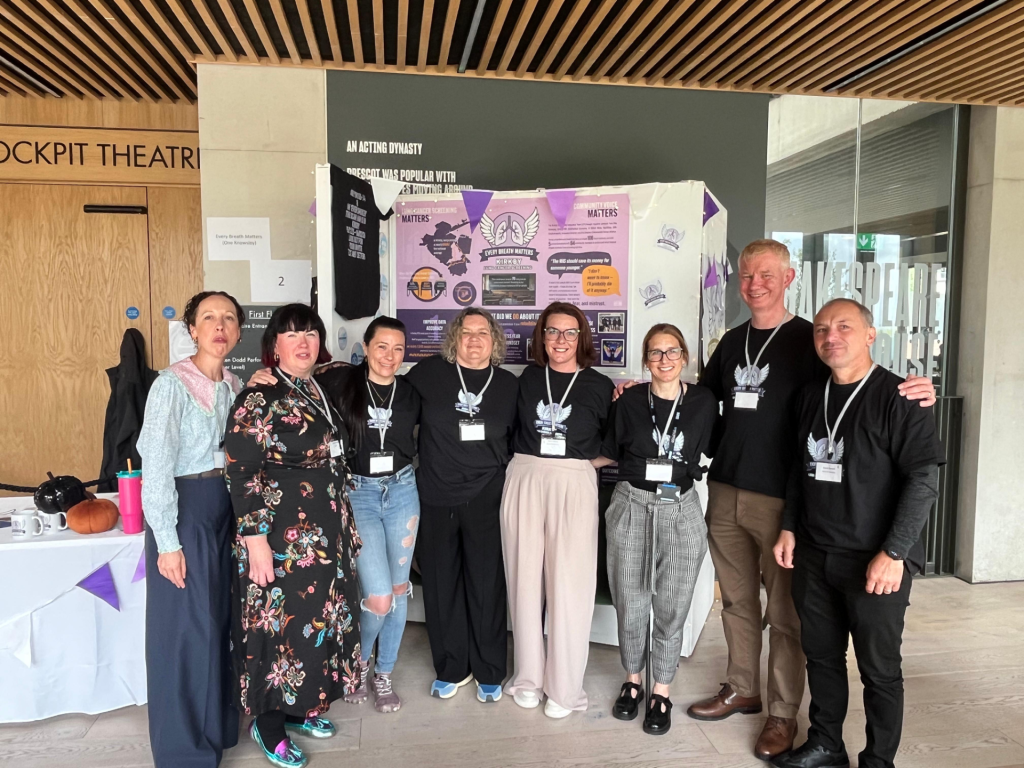
Using this approach, partners developed Every Breath Matters, a community rooted intervention delivered across Kirkby between September 2025 and January 2026.
Activities included:
- 27 breathwork and coffee shop sessions
- Community pop up engagement
- A Halloween town centre takeover
- Christmas lights switch on activities that generated 700 lung health conversations in one evening
- More than 7,900 campaign stickers displayed across shops, market stalls and screening letters
Together, these activities helped make conversations about lung health visible, accessible and relevant within the community.
The impact
The partnership delivered significant improvements in lung screening uptake.
- 1,130 people attended after missing the previous screening round.
- 862 people were referred for CT scans.
- More than 950 trusted conversations were recorded.
- Overall screening uptake increased to 63.8% across Kirkby Primary Care Network.
- Demand increased so significantly that the mobile CT unit returned in March 2026 to provide a further 262 appointments.
These results demonstrate the impact of combining trusted community relationships with evidence led, collaborative approaches.
Why it matters
The Kirkby experience shows that improving health is a partnership endeavour.
When voluntary sector infrastructure organisations, grassroots community groups and the health system work together, anchored in data, community insight and trust, meaningful change is possible.
Every Breath Matters demonstrates how neighbourhood health approaches can improve early diagnosis, reduce health inequalities and strengthen collaboration between communities and health services.