A new political model
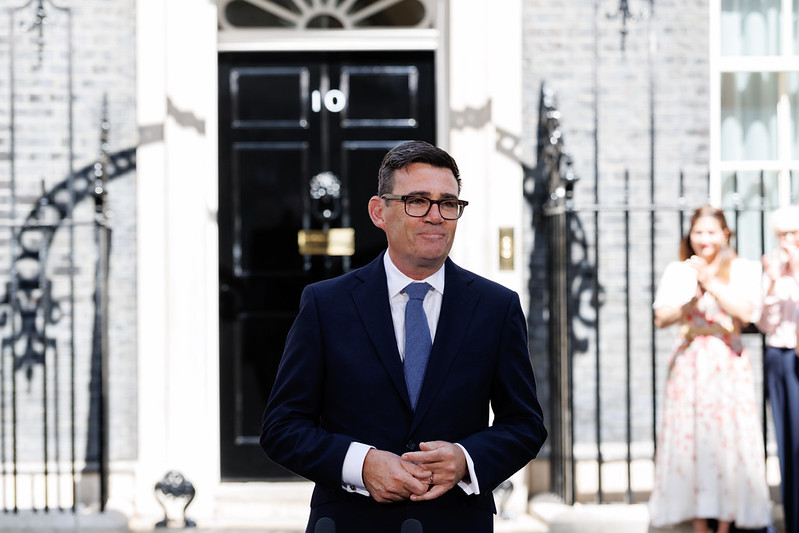
Standing outside of Number 10 Downing Street on Monday 20 July, having accepted the King’s invitation to lead a new government, Prime Minister Andy Burnham said: “We will make this moment a circuit breaker for Britain, bringing forward the biggest changes in the last 40 years: a new political model and a new economic model.”
That approach has seen visible change. In his first fortnight Burnham launched policy announcements covering skills, devolution and the cost of living, delivered in a noticeably different register to his predecessor. Burnham has promised to “give people some breathing space” and put “the care of people at the heart of everything I do” which is in sharp contrast to the previous Prime Minister’s talk of “deep rot” in the UK state.
None of the individual policies are large. But collectively, they tell us something about where this government intends to go over its full term.
Early policies, longer term ambitions
Burnham has been clear that his early moves are not the destination. A VAT cut on energy bills and a cap on bus fares are relief measures, described by the prime minister himself as “breathing space.” The bigger signals are structural.
Number 10 North has been established, which is a new outpost of government based in Manchester and billed as the “engine room of devolution and good growth in every postcode”. We are promised a curriculum overhaul tying secondary schools to local employer needs, alongside a review of young people not in education, employment or training. And in social care Burnham has accelerated a review he inherited and spoken movingly about his own father’s dementia.
The financial picture
Each priority comes with a cost, and other government departments are being told to find it from within their own budgets rather than new money. The results of this should be known after the Autumn budget. One trade-off already surfacing is that Burnham is reportedly considering exempting existing care workers from the tougher immigration rules being drawn up elsewhere in government, to ease pressure on social care ahead of a promised National Care Service. It is a proposal, not yet a decision, but it illustrates the kind of compromise this agenda will keep demanding of departments whose priorities sit elsewhere.
This financial picture was visible after the 2025 spending review. Then the Institute for Fiscal Studies warned that spending had been front-loaded into the first two years of the parliament, with the promise that reform and growth would make the final years more comfortable. That growth has yet to show up. The financial room to manoeuvre that new Chancellor John Healey had has roughly halved, and he has told cabinet colleagues plainly that there is “no new money”. Every new announcement must be funded through reprioritisation, not new borrowing.
It’s worth being honest about what this means. Already announced tax rises were estimated as providing the bulk of the financial adjustments made in the last budget. The early spending was a bet that reform would follow which would free up departmental budgets. Whether it does is one of the biggest open questions of this government.
Commentators covering the government closely have described it, so far, as “Starmerism with a more charismatic figurehead”. The tone has shifted, but the underlying constraints, and much of the cabinet, have not. The real test is how this start develops into a wider platform for larger scale change because right now, that platform is still mostly a promise.
Governing in an uncertain world
None of this is happening in a calm global environment. The war involving Iran has already pushed up energy prices and unsettled bond markets. We’ve never closed the Strait of Hormuz before and whilst many global supply chains have adapted and as governments release fuel from their reserves this may not be a sustainable approach.
Closer to home, this summer’s heatwaves are estimated to have killed around 2,700 people in England and Wales, with the June heatwave alone linked to more than 20,000 deaths across Europe. Drought has been officially declared across more than half of England, and poor harvests across the continent are already pushing food security up the agenda. Whatever “breathing space” is meant to achieve, it has to work against this backdrop, not a stable one.
My own reading of what Burnham is doing, for what it’s worth, is that “Manchesterism” is less a fixed set of economic policies and more an approach to governing itself: more public control, more democratic oversight, and space for community ownership to play a bigger role. It is not a finished destination so much as a way of working that is still being figured out.
What does this mean for the VCFSE sector?
That openness cuts both ways for VCFSE organisations. Because the model isn’t fixed, there is real scope to help shape what it becomes locally, and community and co-operative ownership have a genuine opening here that didn’t exist under the previous, more centralised approach. But the same openness means local government could just as easily end up as the stronger partner in this new settlement, especially as newly forming strategic authorities take on devolved powers they haven’t administered before. Those authorities will need real capacity and capability to handle their new responsibilities and to work well with the communities and organisations around them, and how well they manage that will shape how much room is left for VCFSE partnership.
The real tests are still ahead
The real tests are still ahead. The devolution white paper is expected in the autumn, and Healey’s first Budget on Wednesday 28 October, where the funding detail behind these early announcements will finally have to appear. Burnham has promised “the biggest change moment in 40 years.” What we have seen so far is a down payment on that promise, not the change itself, and whether it scales will depend on decisions made, locally as much as nationally, over the next few years.