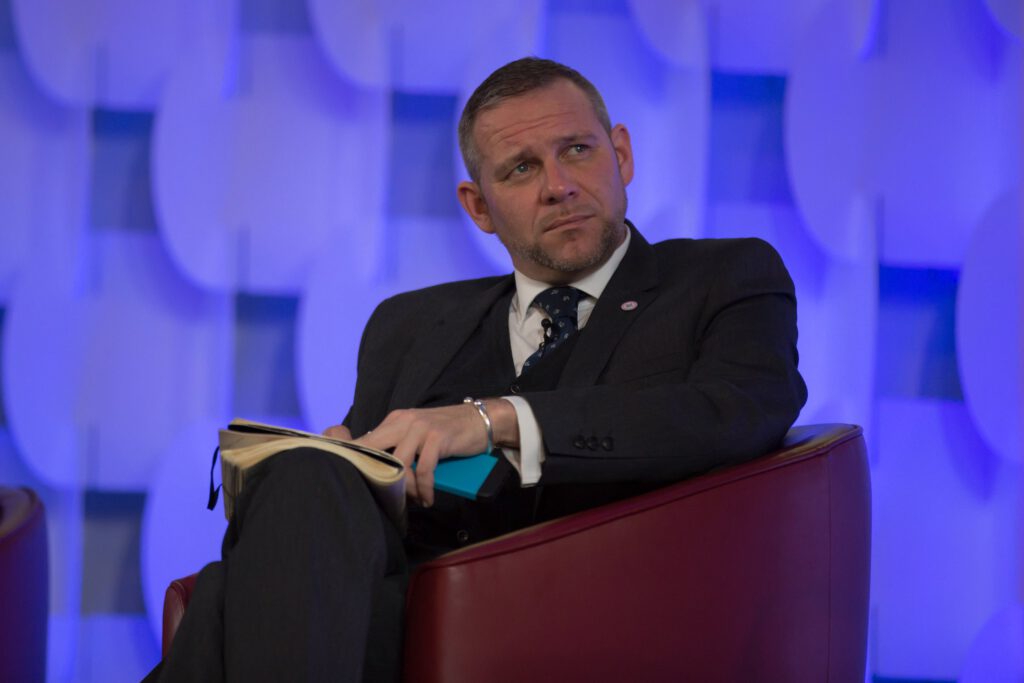
Undertaking his under graduate studies in Preston – the location of the event – and still maintaining strong links with a Social Enterprise in Oldham he qualified on grounds of both connection and expertise. And what an expert he was.
With access to statistics such as a 6,000 increase in the number of Social Enterprises since the start of the pandemic (a 15% increase) and an observation that
he was able to show an increasing and diverse sector. Nevertheless he tempered his observation with the comment that in “the other areas of protected characteristics” the position is not as good – but still better than mainstream business.
He then challenged communities to “come together to build opportunities that the government will not do” – and then issued the supplementary challenge of “how does the VCFSE sector do more and more with less and less”? The answer, as one would expect, was proposed as greater entrepreneurship.
Peter out this into the context of residential social care where 80% of UK residential social care is provided by Private Equity Funded businesses – all of whom are expected to make returns to shareholders. Without a business plan that shows that this is possible then investment does not arrive. The return is made at the expense of people who need support. A social enterprise model, which can apply across almost all ectors of the wider economy, does not offer cheaper services. It does pay higher wages – as part of reducing the high rate of child birth poverty (currently, running at 1 in 3 – up from 1 in 4 a decade ago); the surplus can be used for local initiatives or even deliver a multi-faceted social return in terms of employment, service etc.
Delegates were enthused and challenged in equal measure.
Peter’s presentation slides can be viewed here.